Download Catalog

Guardian Catalog

Follow Me

Subscribe by Email

Your email:

Guardian Environmental Technologies Blog

Current Articles | RSS Feed RSS Feed

Cleanup the oil sheen with SheenGuard

  | Share on Twitter Twitter | Share on Facebook Facebook | Submit to Digg digg it |  Add to delicious  delicious |  Submit to StumbleUpon StumbleUpon |  Share on LinkedIn LinkedIn 


describe the image


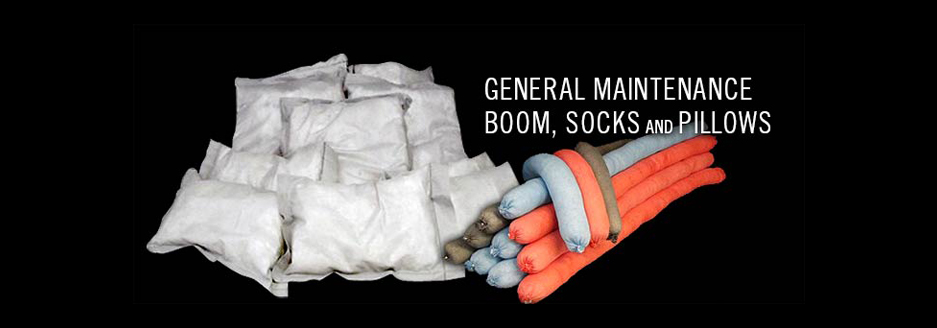
Although it seems like the BP well is finally under control and no longer leaking into the gulf, there is still a massive task ahead to clean up the oil that has washed into the shallow water regions along the Gulf. Guardian's exclusive "Blanket-Boom" products are specifically designed to absorb and permanently contain the thin film of oil that always remains even after the skimmers are done. SheenGuard blanket- booms have a much larger surface area for absorbtion than round booms. In fact on a per foot calculation, a 24" section will have the same surface area as 8, 24" sections of 5" sorbent booms at a cost of about $2.00 per foot, about 28% cost saving. More importantly, SheenGuard blanket booms are filled with PetroGuard D that permanently solidifies the oil and will not allow the oil to leach or leak back into the water. They can be left in place for long periods of time where sheens are present.

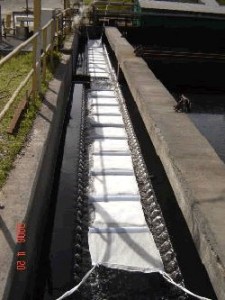
Pillows are clipped together to form the blanket and is the ideal situation for backwater areas.Contact Guardian Environmental Technologies at info@guardianenvironmental.com or call 860 350 2200.

SheenGuard blanket-booms


Oil Spill Solidifier

  | Share on Twitter Twitter | Share on Facebook Facebook | Submit to Digg digg it |  Add to delicious  delicious |  Submit to StumbleUpon StumbleUpon |  Share on LinkedIn LinkedIn 


Solidifying oil with PetroGuard WATCH THIS VIDEO


 THERE IS A SOLUTION TO THE GULF OIL SPILL

Guardian Environmental Technologies offers an immediate solution to the Gulf oil spill that would save hundreds of thousands of dollars, reduce the cleanup time and help save the  precious fishing grounds along the coast. PetroGuard is a polymeric oil spill solidifier that is applied directly to the oil floating on the surface. The oil is instantly solidified and remains floating until it is scooped up and removed. The resulting floating matrix is will not contaminate anything it touches. It can be safely handled and will not release the captured oil in the way conventional absorbents do. If the solidified oil washes up on the beach it will not harm the environment and can be easily collected and disposed of. PetroGuard has a 400% by weight absorption capability meaning one gallon of PetroGuard will absorb and lock up about 4 gallons of oil.

Anyone having a contact with BP one of the regulatory agencies should be contacted to alert them about this technology.

Please contact us at info@guardianenvironmental.com


PetroGuard and Fire Fighting Foam

  | Share on Twitter Twitter | Share on Facebook Facebook | Submit to Digg digg it |  Add to delicious  delicious |  Submit to StumbleUpon StumbleUpon |  Share on LinkedIn LinkedIn 


Emergency spill response to reactive or other hazardous and explosive liquid spills creates a situation that must be responded to quickly and easily. PetroGuard solidifying hyper-immobilizing absorbent is the ideal product to use with vapor suppressing foam products. Most water based foams will initiate a cloud of acid vapor when applied to reactive chemicals. This can be avoided if the spilled chemical is first treated with PetroGuard and then blanketed with Universal Gold. The PetroGuard will instantly solidify the liquid chemical or other hydrocarbon locking the material at the molecular level without creating a chemical reaction, because the process is physical not chemical.Universal Gold Foam

National Fire Protection Association NFPA 11 Standard for Low, Medium, High expansion foams, Chapter 5, Section 5.2.4.3.1 " Water-soluble and certain flammable and combustible liquids and polar solvents that are destructive to regular (non alcohol-resistant) foams shall use alcohol-resistant foams."

Many of our customers are successfully using PetroGuard and foam this way when responding to reactive chemical spills, and have made it part of their company response plans. EHS professionals and response personnel are encouraged to consider this combination as a way to simplify spill response methods and prevent or minimize accidental release of toxic vapors.

Please Contact us for more information.


Don't just absorb spills - PetroGuard them!

  | Share on Twitter Twitter | Share on Facebook Facebook | Submit to Digg digg it |  Add to delicious  delicious |  Submit to StumbleUpon StumbleUpon |  Share on LinkedIn LinkedIn 


chemical spill hazardsWhen responding to hazardous chemical and oil spills, using conventional absorbents just doesn't do the trick. PetroGuard on the other hand will lock up the spill, prevent further migration, drastically reduce or eliminate vapor production and allow you to pick up the chemical or oil easily and quickly as solid. This holds true for a water or land environment. Cost to absorb and solidify a gallon of hazardous liquid chemical is about $3.50.

Disposal is cheap and safe, costing an average of about $375 for a 55 gallon drum  of treated chemicals weighing approximately 400 lbs. Incineration is the recommended way since it is cleaner and more environmentally friendly than landfilling.

PetroGuard your spills, don't just absorb them!


How not to respond to chemical spills!

  | Share on Twitter Twitter | Share on Facebook Facebook | Submit to Digg digg it |  Add to delicious  delicious |  Submit to StumbleUpon StumbleUpon |  Share on LinkedIn LinkedIn 


Unfortunately, many companies still respond to chemical spills using mineral products or sand. While these products are inexpensive, they are also ineffective in actually absorbing the liquid. Sand will only cause the liquid to cling to the surface of the grains, creating another problem of disposing of the sand (weight and bulk), possibly contaminating the responder or creating a pollution problem. Instead, look for a product that:

  • absorbs
  • immobilizes
  • permanently solidifies the oil or chemical

Advanced Absorption Technology will allow first responders to quickly and permantly immobilize a chemical spill, transform the liquid into a solid thereby enhancing efficiency of the cleanup operation, as well as reducing the risk to the responders.


Use of dispersants for oil spills.

  | Share on Twitter Twitter | Share on Facebook Facebook | Submit to Digg digg it |  Add to delicious  delicious |  Submit to StumbleUpon StumbleUpon |  Share on LinkedIn LinkedIn 


Icy oil spill easier to clean, scientists say (from Anchorage Daily News)

CONTRADICTORY: Research funded by oil interests conflicts with conventional wisdom.

(Scientists funded by Shell and six other oil companies) said "that oil spilled in open water tends to spread out quickly over large areas and contaminate the shoreline. In contrast, recent testing in the Barents Sea above northern Europe has shown that ice can act as a natural blockade that traps the oil and gives responders more time to clean it up. The researchers said they discharged crude oil in broken and slushy ice off the northern coast of Norway. Though it isn't illegal here, such experiments have never been approved in U.S. waters.

Cumulatively, the researchers spilled 5,944 gallons of oil on the ice, according to an interim report on the tests.

The study didn't look at the environmental impact of spills in the Arctic. In other industry-funded studies, SINTEF and some researchers at the University of Alaska Fairbanks are still studying the potential toxic effects of oil on Arctic species."

Dispersants consist normally of one or more surfactants. The use of dispersants (detergents similar to dishwashing soap) are very popular with the oil companies, because they are cheap, easy to apply (pour into the water or onto the ice) and make the oil seem to disappear, like in your kitchen sink. What actually happens is that the dispersant (as in spread out) converts the spill into tiny droplets in suspension that seem invisible to the naked eye. That of course makes the amateur environmentalist happy because it is no longer an eyesore. However the real truth is that a detergent is known to be toxic. Detergents will dissolve the natural oils of sea birds and cause them to sink and drown. The toxic effects of the detergents are well known to be harmful. If one were to take a sample of water after treating an oil spill with dispersants, and measure the parts per million toxicity or presence of oil in the water, it would quickly be evident that the parts were far in excess of what is considered safe for human or animal consumption (fresh water of course since we don't drink seawater, but you get the point).

A far better alternatives to dispersants are solidifying polymeric absorbents, that permanently lock up the oil (molecules) so that the oil no longer is a liquid pollutant, even if it comes in contact with wildlife or plants. The resulting solid matrix will float indefinitely and can be allowed to drift ashore as a non-polluting solid and then easily collected for disposal without exposing workers or the environment to the liquid oil. We all remember the pictures of the workers trying to use paper towels to mop up the Exxon Valedez oil spill. However, although the oil companies are aware of these new products, they ignore them because they are more expensive to buy and store for responding to a spill which is why they opt for the detergent approach, claiming it is easier.This does not take into consideration the damage to the environment using disperants or doing nothing.

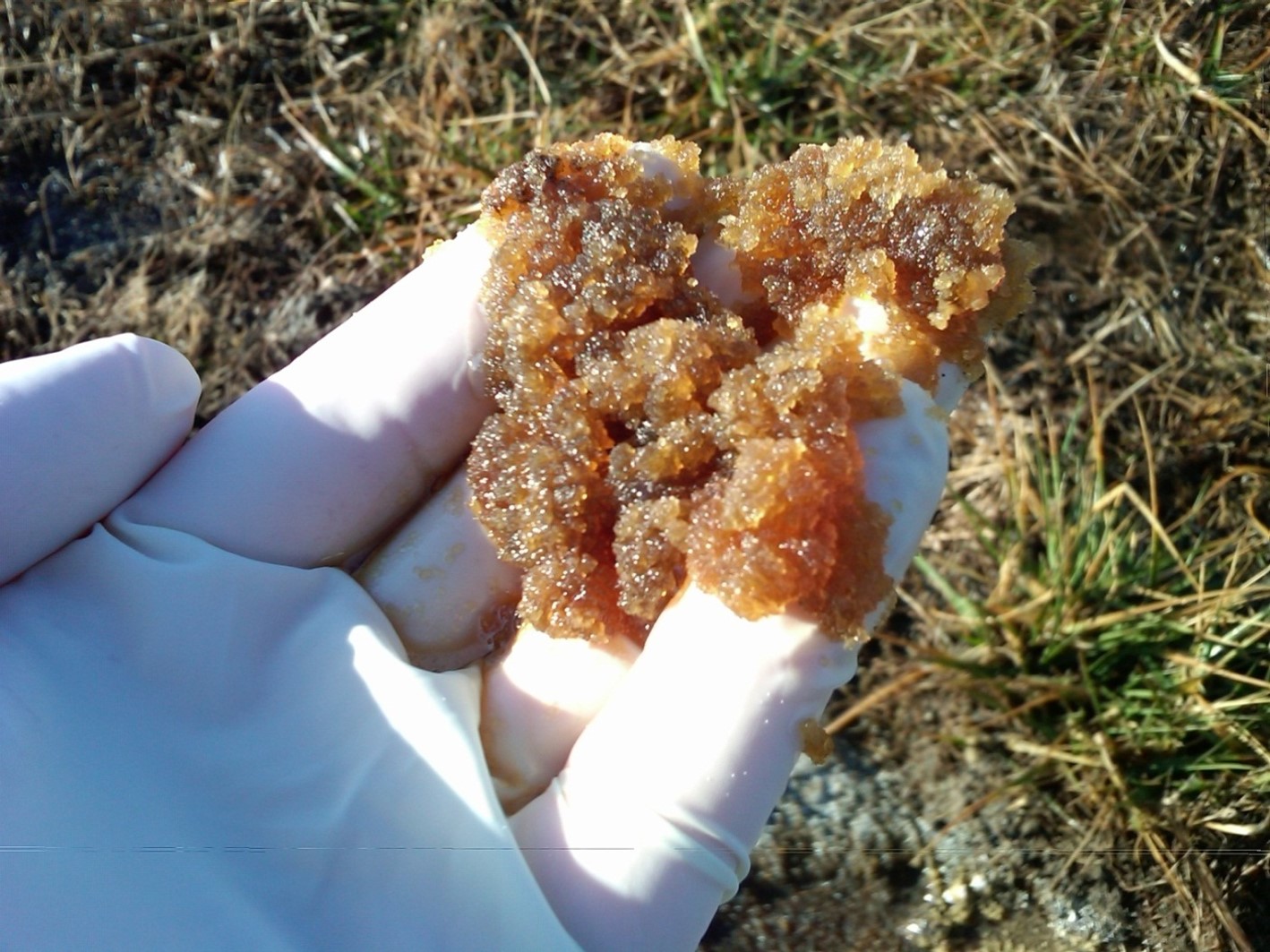
 Crude oil solidified with PetroLite absorbent.

This is a still from a video presentation from our website showing the solidification process that you may view in its entirety by selecting this link.


All Posts